
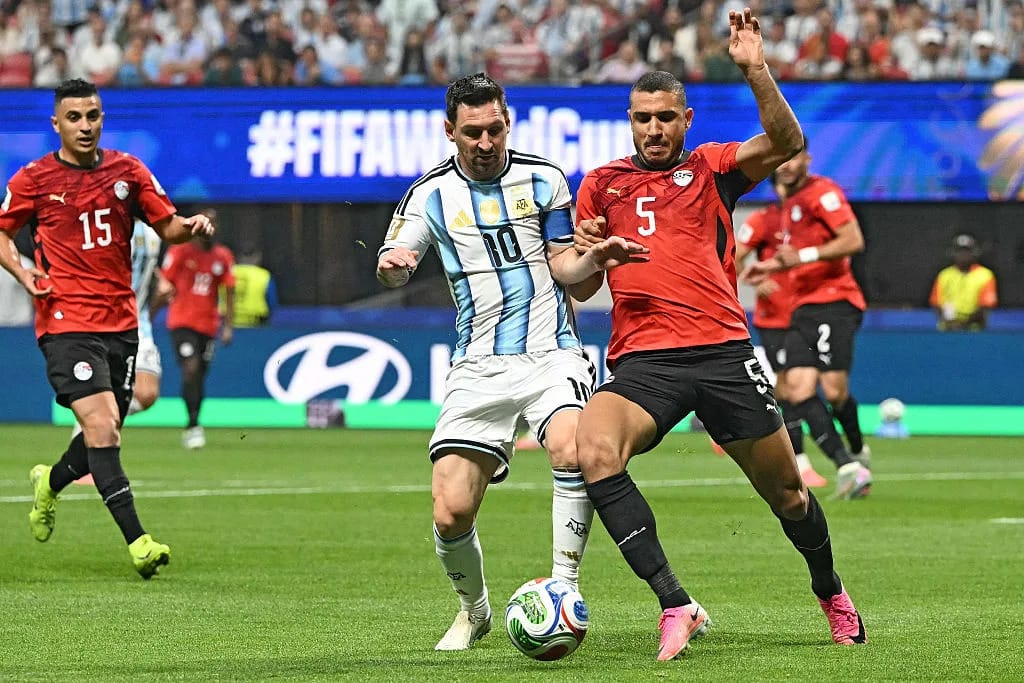
Few would have anticipated the turn of events, not even the Argentinians themselves. In the round of 16 confrontation with Egypt, Lionel Messi’s side found themselves trailing 0-1 after Yasser Ibrahim opened the scoring. That moment drew this reaction from the captain: disbelief and urgency, a sign that Argentina would need to recalibrate quickly if they hoped to avoid an early exit.
Even more astonishing was what followed: Messi, the world’s best-known playmaker, would later miss two penalties in this World Cup—two opportunities that could have changed the course of the match and perhaps the tournament for his team. The first miss came against Austria in the group stage, and on this occasion he added a second miscue from the spot. The sequence after the foul by Haissem Hassan on Nicolás Tagliafico led Messi to step up for the penalty. It was a moment loaded with pressure, given his reputation for composure and precision, yet the execution faltered twice in this tournament.
All told, La Pulga has taken eight penalties at World Cups, converting only four of them. Those numbers are not what fans and analysts have come to expect from him, especially considering the weight he carries for the national team. His record with penalties at the World Cup underscores a rarer blemish on an otherwise flawless record in open play and set pieces, where his influence has often decided matches.
For Argentina, going behind marked a rarity in recent World Cup history. It was the first time they had trailed at the World Cup since the 2006 edition against Mexico, a game they ultimately won 2-1 after extra time. That memory frames today’s scenario: a side known for its capability to dictate pace and possession now finding themselves in an uphill battle from the outset. The question looming over the stadium was whether this match would stretch to the full 120 minutes, with Argentina fighting to rewrite the narrative and avoid a premature exit.
The context surrounding this match also highlights the broader arc of Messi’s World Cup journey. His leadership on the field and his ability to create and convert chances have defined a generation, yet the penalty misses offered a reminder that even the greatest players face moments of vulnerability on the world’s biggest stage. These instances serve as chapters in a larger story of persistence, resilience, and the continuous pursuit of glory on football’s grandest platform.
As the clock ticked on, Argentina’s resolve would be tested once again. They needed to respond not just with more goals, but with a strategic clarity that might unlock the stubborn defense of Egypt. The narrative of the match, then, was not solely about the misses but about the team’s capacity to adapt, to seize control of tempo, and to bend the game back in their favor. Whether today’s contest would ever extend to extra time or penalties would depend on whether they could reset, refocus, and translate their talent into tangible advantage on the score sheet.
In reflecting on this clash, it’s clear that the episode encapsulates both the lofty expectations placed on Lionel Messi and the harsh realities of high-stakes football. His performance, including the penalties, will be scrutinized, celebrated, and debated in equal measure as Argentina seeks to advance in a tournament that has always demanded perfection from a squad steeped in footballing history. The outcome remains to be seen, but the encounter has already added a new, memorable chapter to the ongoing story of Argentina at the World Cup.
Content Source: Yahoo News
Image Credit: Getty Images
All rights to the news content and images belong to their respective copyright owners.