
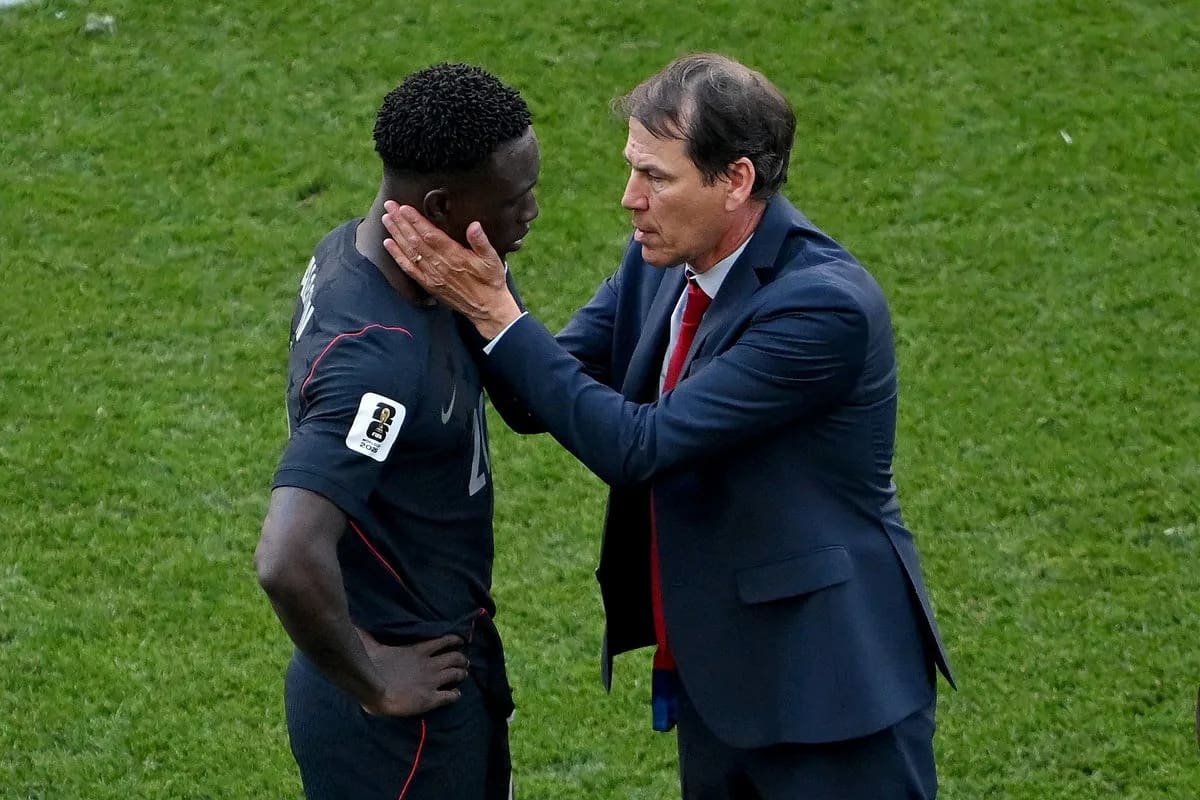
Belgium manager Rudi Garcia has revealed that Folarin Balogun approached him for a personal chat after the United States striker faced controversy stemming from the World Cup round of 16 clash. The USA were eliminated from the tournament with a 4-1 defeat in Seattle, and Balogun was allowed to play despite a one-match ban for a prior red card being suspended by FIFA—an unusual decision that reportedly followed personal intervention from Donald Trump.
Garcia, who is in charge of a Belgium side that had earned a place in the knockout rounds, noted that Balogun’s decision to seek him out for a conversation demonstrated maturity and accountability. The American attacker, at 25 years old, had enjoyed an outstanding run at the World Cup before the sending-off against Bosnia and Herzegovina, and Garcia expressed admiration for Balogun’s willingness to engage with him after the team’s exit.
“It is something I really appreciate,” Garcia said when recalling Balogun’s initiative to speak with him. “It’s not his fault, he’s not the one to blame, and that’s what I told him.” The discussion underscored the midfielder-forward’s character and responsibility in the face of controversy, noting that Balogun had already established himself as a key figure on the field before the incident that marred his tournament.
The broader context surrounding Balogun’s situation involves ongoing scrutiny of perceived political influence within the World Cup framework. FIFA president Gianni Infantino has faced mounting calls for accountability amid allegations of political interference in the tournament, with the situation drawing additional attention due to Trump’s involvement in the events surrounding the World Cup’s political narrative. Infantino’s leadership and the association’s handling of such controversies have been in the spotlight, contributing to discussions about the integrity and independence of the competition.
As the tournament progressed, Belgium, who progressed beyond the group stage, found themselves drawn into a high-profile quarter-final clash. After advancing past the co-hosts, Belgium prepared to face Spain in the quarter-finals in Los Angeles on Friday. The match was highly anticipated, given both teams’ storied histories and the momentum Belgium had built through the tournament’s early rounds. Garcia’s squad arrived in Los Angeles with a mission to translate their earlier promise into a deep run, showcasing a blend of talent, tactical discipline, and resilience that had become the hallmark of their campaign.
Balogun’s experience in the tournament, including the controversial moments, served as a reminder of the pressure and scrutiny that comes with representing a national team on football’s biggest stage. His willingness to engage with his critics and his team’s manager reflected a commitment to accountability and professional conduct, values that Garcia highlighted as essential for a player navigating both the highs of international tournament momentums and the complexities of off-field debates that surround the sport.
Ultimately, the discussion between Balogun and Garcia illustrated a broader theme at the World Cup: the importance of resilience, responsibility, and open dialogue in handling controversy. As Belgium prepared for their quarter-final showdown, the discussions around Balogun’s conduct and the political dimensions of the tournament remained a backdrop to the on-field drama, influencing how players and managers addressed the media, fans, and the global football community. The match against Spain in Los Angeles was set to be a defining moment for Belgium, offering an opportunity to demonstrate the team’s capability to compete at the highest level and to further solidify Balogun’s rising profile on the world stage.
Content Source: Yahoo News
Image Credit: Getty Images
All rights to the news content and images belong to their respective copyright owners.