
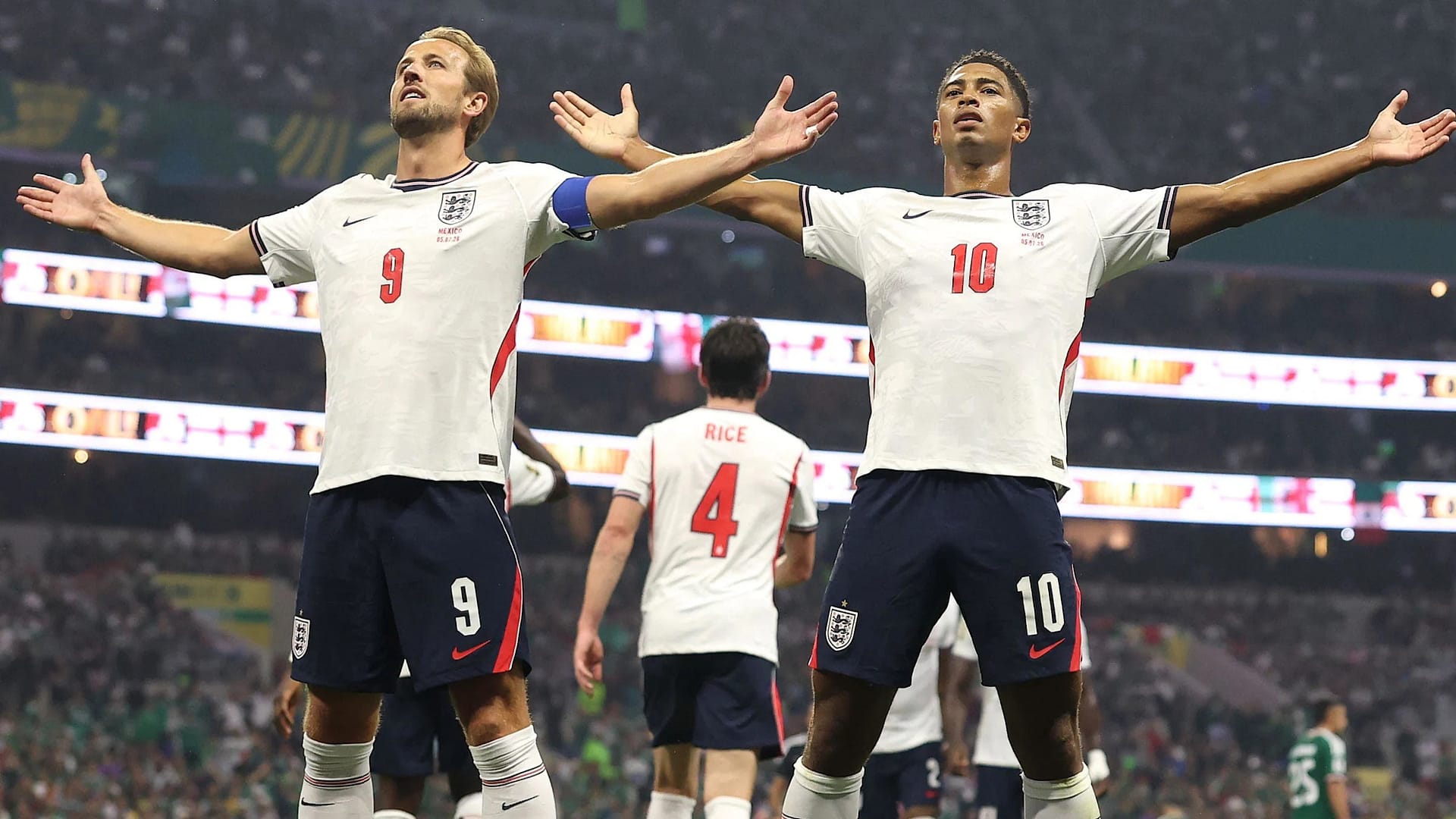
After Jude Bellingham opened the scoring for England against Mexico at the Azteca Stadium, he and Harry Kane were the last to peel away from the celebrations. Left behind by their teammates after the initial wave, the two of them stood side by side, arms outstretched, soaking in the rapturous praise from the England supporters who had descended on Mexico City. It is one of the defining images of England’s 2026 World Cup campaign. Kane and Bellingham were pivotal in England’s tense 3-2 victory in the last 16, and less than two minutes after the opener, the captain supplied the assist for the Real Madrid midfielder to complete a rapid-fire double that quelled the home crowd.
Then came Kane’s moment. With England a man down following Jarell Quansah’s red card, and Mexico pressing, the 32-year-old calmly converted from the spot to seal what proved to be the winner—few players are as dependable from 12 yards. England advanced to the quarter-finals, and their fortunes at this tournament now appear closely tied to the form and impact Kane and Bellingham are delivering on the pitch.
Erling Haaland and Norway will provide another stern test for Thomas Tuchel’s side when they meet in Miami on Saturday. But just how dependent are England’s World Cup ambitions on their two star players? The short answer is: very reliant indeed. Between them, the duo have contributed 10 of England’s 11 goals at the World Cup—Marcus Rashford scoring the other as a substitute to seal a 4-2 win over Croatia in the opener. That means Kane (six goals) and Bellingham (four) have accounted for a remarkable 90.9% of England’s total attacking output, a share greater than any other remaining team in the tournament. In fact, France, the pre-tournament favorites, are next best on 78.6%, thanks to Kylian Mbappe (seven) and Ousmane Dembélé (four) contributing 11 of their 14 goals.
Quantitatively, Kane is responsible for 34.6% of England’s expected goals (xG), while Bellingham has added another 20.3%. Combine their contributions, and the pair has produced more than half of England’s attacking threat—54.9% of the team’s total xG. In terms of actual shooting, Kane has attempted 23.8% of England’s shots and 31.3% of their shots on target, with Bellingham adding 28.1% of England’s shots on target. Their centrality to England’s approach is undeniable.
Yet this isn’t the first time England have leaned on a duo to supply goals at a major tournament. In 1990, Gary Lineker scored four and David Platt three of England’s eight goals, combining for 87.5% of the total. A similar pattern emerged six years later at Euro ’96, when Alan Shearer (five) and Teddy Sheringham (two) tallied seven of England’s eight goals. The current crop are certainly following in those memorable footsteps, underscoring a historical pattern: England’s most fruitful campaigns have often hinged on a potent pairing who can deliver when it matters most.
Content Source: Yahoo News
Image Credit: Getty Images
All rights to the news content and images belong to their respective copyright owners.