
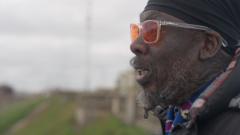
ByJeff BrownWarning: This article contains details of racially offensive language and behaviour”I waited 46 years to break my silence, because I didn’t think anyone would listen. I thought I’d take these stories to my maker.”Rumour had it Roly Gregoire had become a bus driver, a milkman or even a DJ. But what really happened to Sunderland’s first black player was too painful for him to talk about until now.His first-team debut for the club on 2 January 1978 should have been the proudest day of his life, but hours after the 19-year-old’s assist in a 2-0 win over Hull City, the racist abuse started.By the time injury cut short his career two years later, he had faced so much racism that he could not bear to watch football for many years. He moved away, changed his name and until now has not felt able to share his story.”Sometimes I wish I’d never played football, to tell you the truth, because some of the pain, I can still feel it,” Gregoire, now 67, tells BBC Look North in an emotional interview.”Talking to you, I can feel myself welling up at times but I’m trying to contain myself because I want to get this across so the supporters can understand where I’m coming from.”Image source, Sunderland Echo/Sunderland Antiquarian SocietySigned from Fourth Division Halifax Town on Bonfire Night 1977, for a fee of £5,000, Roland Gregoire – a quick, direct and confident striker known to everyone as Roly – had caught the eye with a hat-trick against the Wearsiders’ reserves, earlier that season.Gregoire settled into digs on the sea front in Seaburn, delighted and surprised that it was the very Sunderland suburb much loved by him and his family because of their annual Sunday School outings there from Bradford.Sunderland manager Jimmy Adamson opened the new year by handing him the number seven shirt for the Second Division game against Hull City at Roker Park, and the teenager responded by setting up a goal for club legend Gary Rowell in a 2-0 win.It was a landmark moment for Gregoire which was ruined, forever, by what happened next.He remembers: “After the game I was having a drink with some supporters, and one of them asked: ‘Were your brothers at the game today?’ I said: ‘Yes, five of them.’ And he said: ‘They’re fast!’ But someone interrupted, and I didn’t get the chance to ask what he meant.”Later, I rang one of my brothers to make sure they’d got home OK. He said they’d been coming to find me at the club hostel where I was staying, but on the way someone threw half a brick at them and shouted … they used the N-word, I’ll put it like that.”It was a group of men – a lynch mob – who chased them through the park near the ground.”They were just teenagers. They were so scared – but somehow they managed to escape. It was despicable. Seaburn had meant so much to us, but from that day on my mother, ’til the day she died, never, ever spoke of Sunderland again.”For Gregoire, this was just the start.Finding Roly: The story of Sunderland AFC’s first black footb BBC Sport
Content Source: Yahoo News
Image Credit: Getty Images
All rights to the news content and images belong to their respective copyright owners.