
SEATTLE — In the last 48 hours, the United States men’s national team has been consumed by the tangled saga surrounding Folarin Balogun’s red card in the clash with Belgium. Yet even after FIFA’s disciplinary committee issued its ruling and an apparent intervention from a high-profile political figure, Balogun returned to the starting lineup on Monday, amid a swirl of controversy. And in the end, it appeared that the drama surrounding him barely moved the needle. The USMNT’s sky-high expectations were crushed in a 4-1 defeat to Belgium, a result that underscored a cratered performance rather than the drama circling Balogun. The U.S. attack was nearly nonexistent, and Balogun—once touted as the player who could unlock Belgium’s defense and spark a breakthrough—was largely stifled by the Belgian back line from the opening minutes.
In World Cup cycles, with a limited slate of opponents, teams often move in familiar patterns. It’s tempting to view Monday’s loss to Belgium as a continuation of a prior sting in 2014, when the U.S. fell 2-1 in extra time in a Round of 16 match that featured Tim Howard’s record-setting goalkeeping performance. But this latest result was far harsher: a 4-1 drubbing in which Belgium dismantled a U.S. squad that had shown tantalizing potential and then folded with embarrassing ease. It carried a sting well beyond the scoreboard, touching questions about identity, consistency, and momentum.
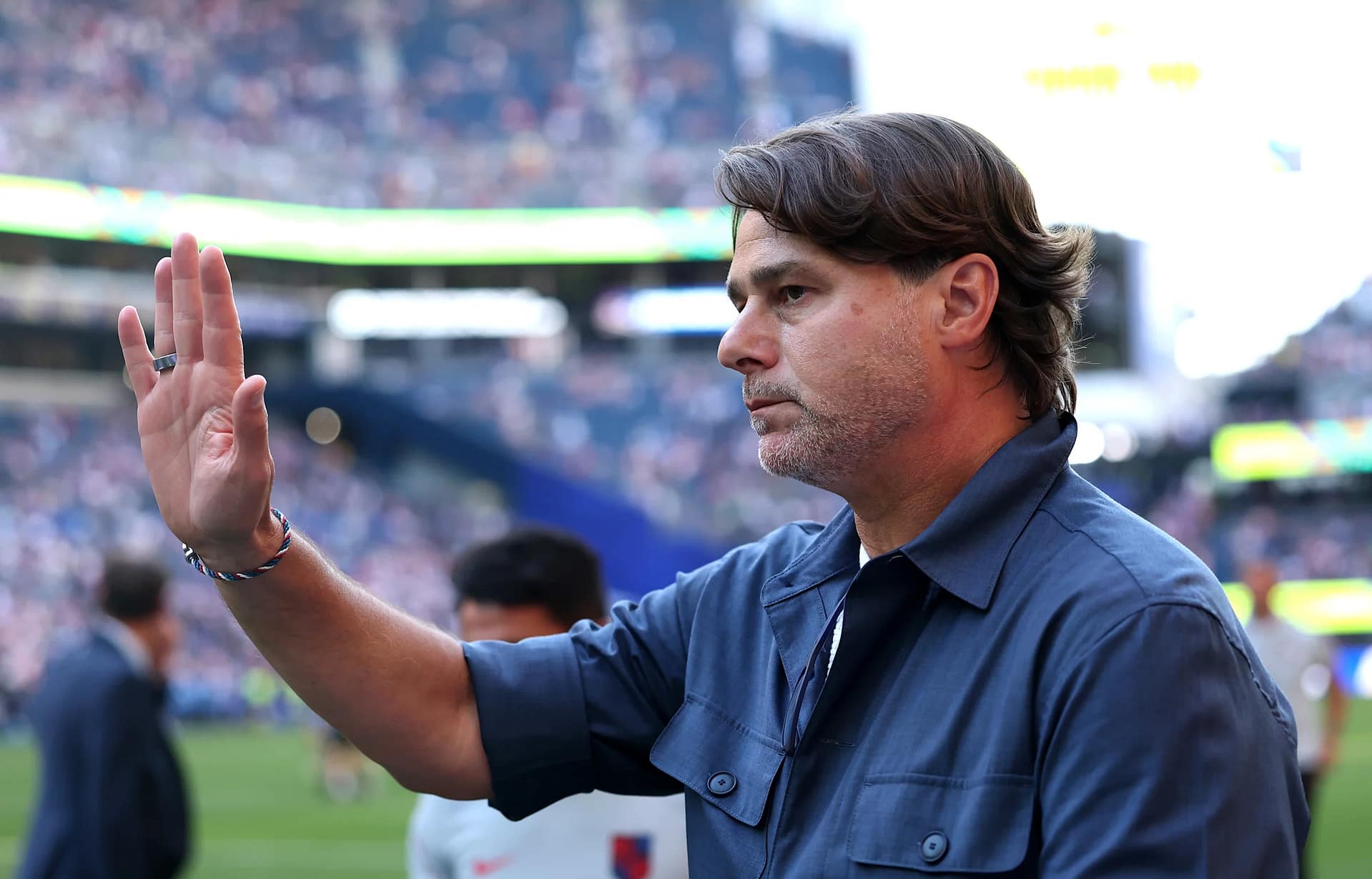
Afterward, USMNT head coach Mauricio Pochettino spoke candidly about the performance, while resisting the temptation to pin the defeat on external distractions. “We don’t need to find another excuse. I think we were not good enough. It wasn’t our day. We didn’t perform in the way we’re supposed to perform or show our quality,” Pochettino said. “All that was happening around was around, but I think it wasn’t a situation that affects us in the group. All teams can have one day sometimes where you don’t perform and nothing goes right for you. And today was that type of day where you suffer because you can’t connect with the game.” He added later that the surrounding saga “didn’t affect our performance,” insisting that the team’s level on the field stood on its own.
Balogun entered the match as the USMNT’s leading scorer, the kind of attacker who could pivot a game with a moment of brilliance or a well-timed run. In the weeks of debate about whether any victory could ever feel legitimate given the ongoing controversy, the on-pitch output suggested the distinction between narrative and reality. The performance, or lack thereof, made Balogun’s presence feel almost ancillary to the broader storyline.
Team captain or leader-in-formation, Balogun spoke with the press about his role and his focus. He said he was concentrating on doing his job and that he didn’t play a part in FIFA’s decision to clear him to participate, a reminder that, for all the attention, the on-field responsibilities remained his primary mandate. Teammate Tyler Adams offered a similar sentiment, acknowledging Balogun’s attempts to create impact—“to be a presence and a nuisance,” as Adams described—while conceding there weren’t enough scoring chances to convert into a meaningful breakthrough.
Together, the day underscored a crucial takeaway: the controversy around Balogun could not, in itself, salvage a performance that failed to meet standard expectations at the World Cup’s level. While it’s natural to debate the ethics, optics, and implications of decisions off the field, the real measure remains what happened on it. And on the field, Belgium’s disciplined defense and clinical execution overwhelmed the United States, leaving the Americans to reflect on what needs to change if they hope to translate potential into results in future fixtures.
Content Source: Yahoo News
Image Credit: Getty Images
All rights to the news content and images belong to their respective copyright owners.